
Disclosure
As an Amazon Associate, we may receive a commission from qualifying purchases made through links on this website. This comes at no additional cost to you and helps support the content we create.
A 48-volt battery voltage chart is an essential tool for monitoring your battery’s state of charge and health. It provides critical voltage readings from full charge to complete discharge.
Using this chart prevents deep discharges that permanently damage expensive battery banks. It ensures you maximize performance and extend your battery’s overall lifespan significantly. Proper voltage monitoring is key to reliable power.
Best Battery Monitors for 48V Systems – Detailed Comparison
Victron Energy SmartShunt 500A – Best Overall Monitor
The Victron SmartShunt provides professional-grade battery monitoring without a direct display. It connects via Bluetooth to your smartphone for detailed insights. This device offers unparalleled accuracy for state of charge and voltage tracking.
- Bluetooth connectivity for smartphone app monitoring
- High 500A current rating for large systems
- Extremely accurate State of Charge (SOC) percentage
- Compatible with all 48V battery chemistries
Best for: Users who want the most accurate data and advanced features via a mobile app.

- ALL-IN-ONE WATERPROOF SMART BATTERY MONITOR: The Victron SmartShunt IP65 is a…
- DETAILED IN-APP INSIGHTS: Battery monitor data is conveniently presented in the…
- PRECISION SHUNT TECHNOLOGY: The Smart Shunt uses highly accurate shunt…
Renogy 500A Battery Monitor – Best Value
Renogy’s monitor features a clear digital display and comprehensive data tracking at an affordable price. It shows voltage, current, and amp-hours consumed. This model delivers excellent functionality for the cost-conscious user.
- Built-in bright LCD display for easy reading
- Measures voltage, current, power, and amp-hours
- Programmable alarms for high/low voltage
- Simple installation with included shunt
Best for: Budget-focused DIY solar and RV owners needing reliable, basic monitoring.

- 1% Accuracy Measurement: Shunt-type battery monitor design provides much more…
- Protect the batteries: With High and low capacity alarm functions, our battery…
- Fit for all battery: The energy monitor is compatible with various battery…
BMV-712 Smart Battery Monitor – Premium Choice
The BMV-712 combines a high-contrast display with Bluetooth for dual-interface monitoring. It provides historical data and customizable alarms. This is the ultimate solution for critical power systems.
- Dual built-in display and Bluetooth connectivity
- Tracks historical data and time-to-go
- Programmable relays for automatic control
- Exceptional accuracy for precise management
Best for: Serious off-grid and marine applications where reliability is non-negotiable.

- Fitment: BMV 712 smart battery monitor with high precision, is a smart battery…
- OE Number: The part number of battery monitor for reference is BMV 712, please…
- Function: Battery monitor can be programmed to measure battery temperature…
48V Battery Voltage Readings
Interpreting your 48V battery voltage chart correctly is crucial for maintaining battery health. Different states of charge produce specific voltage readings.
What is a Healthy 48V Battery Voltage?
A fully charged 48V battery reads significantly higher than its nominal voltage. This is due to the surface charge after charging completes. A healthy resting voltage indicates a well-maintained system.
- Fully Charged (100% SOC): 54.4V to 54.8V for lithium; 50.9V to 51.3V for lead-acid.
- Nominal Voltage (50% SOC): Approximately 48.0V for lithium; 48.2V for lead-acid.
- Low Charge (20% SOC): Around 46.8V for lithium; 47.5V for lead-acid.
Key Voltage Levels You Must Know
Certain voltage thresholds are critical for battery longevity. Exceeding these limits can cause permanent damage. Always refer to your battery’s specific datasheet for precise values.
- Float Charge Voltage: The maintenance voltage that keeps the battery full without overcharging.
- Equalization Voltage: A controlled overcharge for lead-acid batteries to balance cells.
- Low Voltage Disconnect (LVD): The voltage at which the inverter shuts off to prevent damage.
Key Takeaway: A “48V” battery is only at 48V when it’s approximately half-discharged. Always measure voltage after the battery has rested for several hours to get an accurate State of Charge reading.
How to Measure Your Battery Voltage Accurately
Proper measurement technique is essential for reliable data. Inaccurate readings lead to poor battery management decisions. Follow these steps for precision.
- Ensure the battery has been at rest for 2-4 hours after charging or discharging.
- Use a calibrated digital multimeter set to the DC voltage setting.
- Place the probes directly on the battery terminals, not on corroded cables.
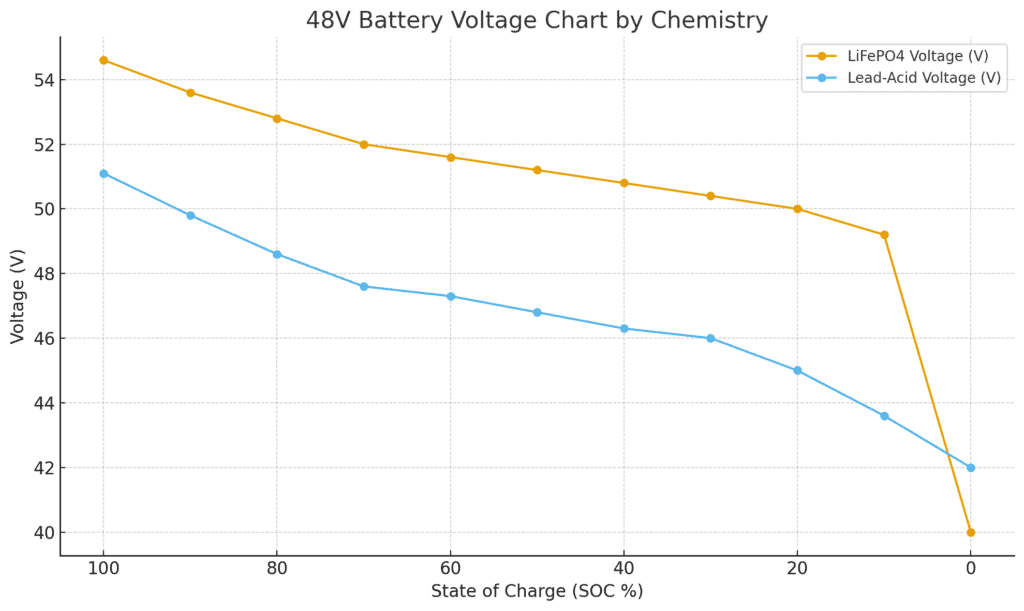
48V Battery Voltage Chart by Chemistry
Not all 48V batteries operate at the same voltage levels. Each chemistry has a unique voltage profile and charging requirements.
48V Battery Voltage Chart by Chemistry
| State of Charge (SOC) | LiFePO₄ Voltage (V) | Lead-Acid Voltage (V) |
|---|---|---|
| 100% | 54.4–54.8 V | 50.9–51.3 V |
| 90% | 53.6 V | 49.8 V |
| 80% | 52.8 V | 48.6 V |
| 70% | 52.0 V | 47.6 V |
| 60% | 51.6 V | 47.3 V |
| 50% | 51.2 V | 46.8 V |
| 40% | 50.8 V | 46.3 V |
| 30% | 50.4 V | 46.0 V |
| 20% | 50.0 V | 45.0 V |
| 10% | 49.2 V | 43.6 V |
| 0% | ~40.0 V (BMS Cut-off) | 42.0 V (Damaging) |
Below is a graph showing the relationship between voltage and state of charge
Lithium Iron Phosphate (LiFePO4) Voltage Chart
LiFePO4 batteries have a very flat voltage discharge curve for most of their capacity. This makes voltage-based state of charge estimation challenging. They require a specific charging profile for optimal lifespan.
- 100% Charged (Absorption): 58.4V (3.65V per cell)
- 100% Resting: 54.4V – 54.8V (3.40V – 3.425V per cell)
- 50% Capacity: 52.0V – 52.8V (3.25V – 3.30V per cell)
- 0% (BMS Cut-off): ~40.0V (2.5V per cell)
Lead-Acid (Flooded, AGM, Gel) Voltage Chart
Lead-acid batteries have a more linear voltage drop as they discharge. They require periodic equalization charges to prevent sulfation. Their voltage is highly sensitive to temperature and load.
- 100% Charged (Equalized): 60.0V – 63.0V (2.50V – 2.58V per cell)
- 100% Resting: 50.9V – 51.3V (2.12V per cell)
- 50% Capacity: 48.2V (2.01V per cell)
- 0% (Damaging): 42.0V (1.75V per cell)
Critical Difference: A “full” LiFePO4 battery rests at a higher voltage (~54.4V) than a “full” lead-acid battery (~51.0V). Never use a lead-acid charger on a lithium battery, as it will severely undercharge it.
How to Maintain Optimal 48V Battery Voltage
Proper maintenance extends battery life and ensures reliable performance. Voltage management is the cornerstone of effective battery care. These proven strategies will help you maximize your investment.
Setting Correct Charger Parameters
Incorrect charger settings are a leading cause of premature battery failure. Each battery chemistry requires specific voltage thresholds. Always program your charger according to manufacturer specifications.
- Absorption Voltage: Set to 58.4V for LiFePO4, 59.2V for AGM
- Float Voltage: Program to 54.4V for lithium, 54.0V for lead-acid
- Equalization: Disable for lithium, set to 62.0V for flooded lead-acid
- Temperature Compensation: Essential for lead-acid, typically -5mV/°C/cell
Preventing Voltage-Related Damage
Both over-voltage and under-voltage can permanently damage your battery bank. These conditions stress the internal components and reduce overall capacity. Implement these protective measures immediately.
- Over-Voltage Protection: Set BMS or inverter to cut off at 58.8V for lithium
- Low Voltage Disconnect: Configure to 46.0V for lithium, 48.0V for lead-acid
- Regular Monitoring: Check voltage weekly and after heavy usage cycles
- Load Management: Avoid drawing more than 50% of battery capacity regularly
Monthly Maintenance Checklist
Consistent maintenance prevents small issues from becoming major problems. This quick routine takes only minutes but significantly extends battery life. Follow these steps every 30 days.
- Measure and record resting voltage after 4 hours without charge or load
- Inspect terminals for corrosion and clean with baking soda solution if needed
- Check all connections for tightness and signs of overheating
- Verify charger is maintaining correct absorption and float voltages
Pro Tip: For lead-acid batteries, perform an equalization charge every 30-60 days. This controlled overcharge helps dissolve sulfate crystals and balances cell voltages, significantly extending battery lifespan.
Troubleshooting Common 48V Battery Voltage Issues
Voltage problems can indicate serious underlying issues with your battery system. Quick diagnosis prevents permanent damage and safety hazards. This guide helps you identify and resolve the most common voltage-related problems.
Identifying Voltage Imbalance Symptoms
Voltage imbalance between cells or batteries reduces overall capacity and lifespan. It often indicates aging cells or poor maintenance practices. Watch for these telltale signs of imbalance.
- Rapid Voltage Drop: Voltage plummets quickly under small loads
- Incomplete Charging: Charger cuts off early despite low state of charge
- Individual Cell Variations: More than 0.2V difference between cells in a bank
- Reduced Runtime: System provides less power than expected
Step-by-Step Voltage Problem Diagnosis
Systematic troubleshooting helps pinpoint the exact cause of voltage issues. Follow this logical sequence to identify problems efficiently. Always prioritize safety when working with high-voltage systems.
- Measure total bank voltage and compare to your voltage chart baseline
- Check individual battery voltages in a series string for imbalances
- Test voltage under typical load to identify voltage sag issues
- Verify charger output voltage matches manufacturer specifications
- Inspect all connections and cables for corrosion or looseness
Solving Persistent Low Voltage Problems
Chronic low voltage typically indicates deeper system issues. These problems won’t resolve with simple charging cycles. Address these common root causes for lasting solutions.
- Sulfated Lead-Acid: Perform equalization charge or replace severely damaged batteries
- Weak Cells in Bank: Identify and replace underperforming individual batteries
- Parasitic Loads: Check for devices drawing power when system should be idle
- Undersized Cabling: Upgrade to thicker cables to reduce voltage drop
Safety Warning: If you measure any single battery in a 48V bank below 10V, it may be severely damaged or pose a safety risk. Isolate it immediately and consult a professional before attempting recovery charging.
Advanced 48V Battery Voltage Management Techniques
Mastering voltage management unlocks maximum performance and longevity from your battery bank. These advanced strategies go beyond basic maintenance. They optimize your entire energy system for efficiency and reliability.
Temperature Compensation Strategies
Battery voltage is significantly affected by temperature variations. Lead-acid batteries require voltage adjustments to prevent damage. Lithium batteries are less sensitive but still benefit from thermal management.
- Lead-Acid Compensation: -5mV/°C per cell (approximately -0.3V for 48V at 10°C below 25°C)
- Charging Temperature Limits: Never charge below 0°C (32°F) for lithium batteries
- Optimal Range: Maintain batteries between 15°C and 25°C (59°F – 77°F) for peak performance
- Thermal Monitoring: Install temperature sensors for automated voltage adjustment
Implementing Smart Voltage Monitoring Systems
Modern battery monitors provide real-time voltage tracking and historical data analysis. These systems alert you to problems before they cause damage. Integration with solar controllers and inverters creates a comprehensive management solution.
- Automated Alerts: Receive notifications for high/low voltage conditions
- Data Logging: Track voltage trends over days, weeks, and months
- Remote Monitoring: Check battery status from your smartphone anywhere
- Integration: Connect with solar charge controllers for automated charging cycles
Seasonal Voltage Adjustment Guide
Battery voltage requirements change with seasonal temperature shifts. These adjustments prevent undercharging in winter and overcharging in summer. Follow this seasonal maintenance schedule.
- Spring/Fall (10-20°C): Use standard voltage settings from manufacturer specs
- Summer (>25°C): Reduce float voltage by 0.3V to prevent excessive gassing
- Winter (<10°C): Increase absorption voltage by 0.4V for complete charging
- Extreme Cold (<0°C): Disable lithium charging; use temperature-compensated charging for lead-acid
Expert Insight: For critical applications, implement a three-stage monitoring system: 1) Basic voltage alarms, 2) Smart shunt for capacity tracking, and 3) Cloud-based monitoring for remote management. This layered approach provides redundancy and comprehensive protection.
48V Battery Voltage FAQs and Expert Answers
Common questions about 48V battery voltage often reveal important maintenance insights. These expert answers address the most frequent user concerns. They provide practical solutions for real-world battery management scenarios.
Critical Voltage Questions Answered
Understanding these fundamental concepts prevents costly mistakes and extends battery life. These answers are based on manufacturer specifications and field testing. Apply them to your specific battery system for optimal results.
- Why does my 48V battery read 52V when fully charged? This is normal – nominal voltage (48V) represents approximately 50% charge. A higher voltage indicates surface charge and chemical potential.
- How low can I safely discharge my 48V battery? For lithium: 46V-47V; for lead-acid: 48V. Deeper discharges cause permanent capacity loss and reduce lifespan significantly.
- Why does voltage drop quickly under load? This indicates aging batteries, undersized cables, or high internal resistance. Check individual cell voltages and connection integrity.
- Can I mix different battery types in a 48V system? Never mix chemistries or ages. Different charging requirements and voltage characteristics will damage all batteries in the system.
Quick Voltage Reference Guide
Keep this essential reference handy for daily battery management. These voltage thresholds apply to most common 48V battery systems. Always verify with your specific battery’s datasheet for precise values.
| Situation | Lithium (LiFePO4) | Lead-Acid | Action Required |
|---|---|---|---|
| Storage Voltage | 53.2V | 50.5V | Ideal for long-term storage |
| Immediate Charge | 52.0V | 49.0V | Charge within 24 hours |
| Emergency Shutdown | 46.0V | 47.0V | Stop all discharge immediately |
| Equalization Needed | N/A | 48.5V | Perform equalization charge |
Pro Tip: For the most accurate state of charge reading, measure voltage when the battery has been at rest for at least 4 hours with no charging or discharging activity. This eliminates surface charge and load-induced voltage sag.
48V Battery Voltage Safety and Best Practices
Working with 48V battery systems requires strict safety protocols and proper handling. High-voltage DC systems present unique hazards that demand respect. These guidelines ensure both personal safety and equipment protection.
Essential Safety Protocols for Voltage Testing
Proper safety measures prevent electrical shocks and equipment damage during voltage testing. Always assume the system is live until verified otherwise. Follow these critical safety steps for every measurement.
- Personal Protective Equipment: Always wear safety glasses and insulated gloves when testing
- Tool Safety: Use properly insulated multimeter probes and CAT III or IV rated meters
- One-Hand Rule: Keep one hand in your pocket to prevent current across the chest
- Work Area Preparation: Ensure dry conditions and secure footing before beginning tests
Emergency Voltage Situation Response
Knowing how to respond to voltage emergencies prevents injury and minimizes damage. Quick, correct action is essential when problems occur. Memorize these emergency response procedures.
- Immediate Shutdown: Disconnect charging sources and loads if voltage exceeds 58V or drops below 42V
- Ventilation: Open all doors and windows if you smell sulfur (rotten eggs) from lead-acid batteries
- Thermal Runaway: Evacuate area and call emergency services if battery temperature exceeds 60°C (140°F)
- Documentation: Record all voltage readings and symptoms before attempting any repairs
Long-Term Battery Storage Voltage Guidelines
Proper storage voltage preserves battery health during extended inactivity. Incorrect storage conditions cause permanent capacity loss. Follow these specific voltage targets for different storage durations.
- Short-Term (1-3 months): Store lithium at 53.2V, lead-acid at 50.5V with monthly recharge
- Medium-Term (3-12 months): Store at 50% SOC (lithium: 52.0V, lead-acid: 48.2V) in cool, dry location
- Long-Term (>12 months): Not recommended – cycle batteries quarterly or maintain with float charger
- Temperature Control: Ideal storage temperature is 10-25°C (50-77°F) regardless of chemistry
Critical Safety Warning: Never attempt to open or modify lithium battery packs. The internal management systems operate at dangerous voltages even when the external terminals read zero. Always contact qualified professionals for internal repairs.
Conclusion: Mastering Your 48V Battery System
Understanding your 48-volt battery voltage chart is essential for maximizing performance and lifespan. Proper voltage management prevents damage and ensures reliable power. This knowledge saves you money on premature replacements.
The most critical practice is regular monitoring using the correct voltage thresholds for your battery chemistry. Consistent voltage checks are your first line of defense against system failure. This simple habit extends battery life significantly.
Download our printable voltage chart and begin tracking your system’s health today. Share this guide with others who manage similar power systems. Implement these strategies to protect your investment.
You now have the expert knowledge to confidently maintain your 48V battery bank. Your system will deliver reliable power for years to come with proper care.
Frequently Asked Questions about 48V Battery Voltage
What is the ideal voltage for a fully charged 48V lithium battery?
A fully charged 48V LiFePO4 battery should read between 54.4V and 54.8V after resting. This voltage represents 100% state of charge. The nominal 48V rating is actually the midpoint of its capacity.
This higher voltage accounts for the surface charge after charging completes. Always allow the battery to rest for a few hours after charging for an accurate reading. Never use a lead-acid charger, as it will undercharge the system.
How often should I check my 48V battery bank voltage?
For routine maintenance, check your voltage at least once per week. Perform additional checks after heavy usage cycles or extreme temperature changes. Consistent monitoring helps identify trends before they become problems.
Invest in a Bluetooth battery monitor for continuous tracking without manual effort. These devices provide historical data and customizable alerts. This proactive approach significantly extends your battery’s operational lifespan.
Why does my 48V battery voltage drop so quickly under load?
Rapid voltage drop typically indicates aging batteries or high internal resistance. It can also signal undersized cables causing excessive voltage drop. This symptom often appears in older battery banks.
Check individual cell voltages for imbalances. Test connections for corrosion and tightness. If the problem persists, you may need to replace weak batteries in the series string to restore proper performance.
What is the lowest safe voltage for a 48V lead-acid battery?
Never discharge a 48V lead-acid battery below 48.0 volts under load. This represents approximately 50% depth of discharge. Deeper discharges cause permanent sulfation damage and capacity loss.
Set your inverter’s low voltage disconnect to 48.0V for protection. For flooded batteries, immediately recharge after reaching this threshold. Regular deep cycling drastically shortens their usable life.
Can I use a car battery charger on my 48V golf cart battery?
No, standard 12V car chargers are completely incompatible with 48V systems. They lack the proper voltage output and charging profile. Using one will not charge your batteries and could damage the charger.
You must use a charger specifically designed for 48V battery banks. Ensure it matches your battery chemistry—lithium, AGM, or flooded. The correct charger is essential for safety and battery longevity.
What voltage should I store my 48V lithium batteries at long-term?
For optimal long-term storage, charge LiFePO4 batteries to approximately 53.2V (3.325V per cell). This represents about 50-60% state of charge. It minimizes stress on the cells during extended inactivity.
Store batteries in a cool, dry location between 10-25°C (50-77°F). Check voltage every three months and recharge if it drops below 52.0V. Proper storage preserves capacity for years.
How do I balance the voltage between batteries in my 48V bank?
For lead-acid batteries, perform an equalization charge every 30-60 days. This controlled overcharge helps balance cell voltages. For lithium batteries, the Battery Management System (BMS) typically handles balancing automatically.
Manually check individual battery voltages monthly. If you find variations exceeding 0.5V between units, you may need to charge them individually. Significant imbalances indicate aging or failing batteries that need replacement.